




Peak seasons can be one of the most profitable times for Amazon sellers, but they can also create major operational challenges if inventory is not managed properly. During shopping events like Prime Day, Black Friday, Cyber Monday, and holiday sales, customer demand often increases rapidly. Sellers who fail to prepare may face stock shortages, delayed replenishment, rising storage costs, and even a drop in product rankings.
Successful sellers usually prepare months in advance by forecasting demand, improving listings, monitoring inventory movement, and aligning advertising strategies with stock availability. A strong inventory plan not only helps maintain sales momentum but also improves customer satisfaction during high-traffic periods.
In this guide, we will cover 10 practical ways sellers can improve inventory planning, avoid common fulfillment issues, and scale more efficiently during seasonal demand spikes.
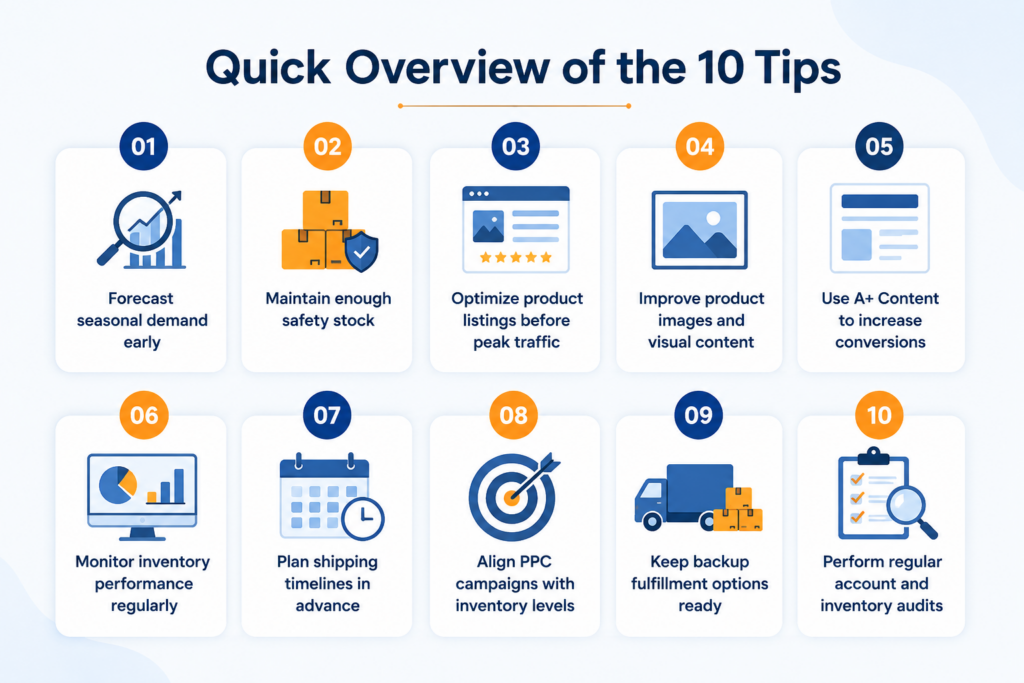

One of the biggest mistakes sellers make is waiting too long to prepare inventory for peak seasons. Demand forecasting should begin well before shopping events start so suppliers and logistics partners have enough time to process shipments.
Reviewing previous sales performance, seasonal shopping patterns, and advertising trends can help sellers estimate future inventory requirements more accurately. Businesses that focus on proper Amazon keyword research and sales trend analysis are often better prepared for sudden increases in customer demand.
Accurate forecasting also helps sellers avoid emergency shipping expenses and unnecessary overstock situations.

Peak-season demand can change quickly, especially when products begin ranking higher or receive additional advertising exposure. Maintaining extra inventory as safety stock helps reduce the risk of stockouts during unexpected sales spikes.
Strong Amazon FBA Inventory Management becomes especially important when shipping delays or warehouse receiving issues occur. Sellers who maintain backup inventory are usually in a better position to protect rankings and maintain consistent sales throughout busy shopping periods.
The goal is to maintain a healthy balance between available stock and storage costs without interrupting fulfillment performance.

Higher traffic alone does not guarantee more sales. Product listings must be optimized properly so customers can easily find products and understand their value quickly.
Before seasonal campaigns begin, sellers should improve titles, bullet points, backend keywords, and product descriptions. Many brands invest in Amazon Listing Optimization Services to improve search visibility and conversions before major shopping events.
Well-optimized listings also support stronger organic rankings and improve advertising efficiency during competitive periods.

During busy shopping seasons, customers often compare multiple products within seconds. High-quality visuals help products stand out and create a stronger first impression.
Professional Amazon Product Images can highlight features, usage scenarios, product dimensions, and benefits more effectively than text alone. Lifestyle images and infographics are especially useful because they help shoppers understand products faster while building trust.
Better visual content often leads to higher click-through rates and improved conversion performance.
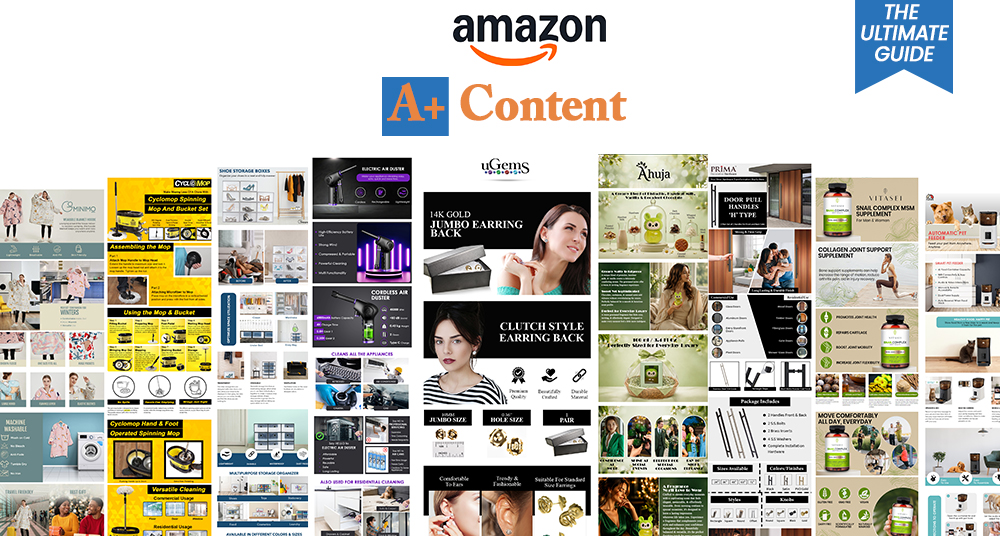
Enhanced visual content can make a significant difference during peak traffic periods. Professionally designed Amazon A+ Content helps brands explain product benefits more clearly while improving the overall shopping experience.
A+ sections may include:
These elements help shoppers make faster purchasing decisions, especially when comparing competing products during seasonal promotions.

Inventory management during peak seasons requires constant monitoring because sales velocity can change very quickly. Sellers should review inventory movement daily to avoid sudden shortages or fulfillment disruptions.
Important areas to monitor include:
Many businesses combine inventory tracking with professional Amazon Seller Account Management to improve operational control during high-demand periods.

Shipping delays become much more common during holiday seasons because warehouses, ports, and carriers experience heavy volume increases. Sellers who plan shipments too late may face delayed inventory check-ins or stock shortages.
Creating a detailed shipping schedule allows sellers to manage production timelines, freight bookings, and warehouse receiving more efficiently. Early planning also reduces the risk of costly last-minute logistics decisions.
This preparation becomes even more important for international shipments and large-volume inventory orders.

Advertising can increase sales velocity very quickly during seasonal events. However, increasing ad spend without enough inventory can create problems if products sell out unexpectedly.
Properly managed Amazon PPC Services help sellers scale traffic while maintaining inventory stability. Before increasing advertising budgets, sellers should review stock availability, reorder timelines, and projected sales velocity carefully.
Balancing advertising performance with inventory availability helps maintain profitability while protecting long-term rankings.

Experienced sellers often prepare backup fulfillment methods before peak seasons begin. If Amazon warehouses experience delays or storage restrictions, alternative fulfillment options can help maintain product availability.
Using FBM support or third-party logistics providers creates additional flexibility during high-demand periods. This approach can reduce operational risks and help sellers continue fulfilling orders even during unexpected disruptions.
Backup fulfillment strategies are especially useful for fast-selling products with strong seasonal demand.

Small listing problems can become major sales issues during busy shopping seasons. Conducting an Amazon Account Audit before major events helps sellers identify inventory problems, listing suppressions, and account-related risks early.
A detailed audit may help uncover:
Fixing these issues before peak traffic begins helps create a smoother selling experience and reduces the chances of operational interruptions.
Managing inventory during seasonal demand spikes requires more than simply increasing stock levels. Sellers must balance forecasting, listing optimization, logistics planning, Advertising Management, and operational monitoring to perform successfully during competitive shopping periods.
Businesses that invest in strong Amazon SEO Services, Optimized Listings, better visual content, and effective inventory planning are usually better prepared to scale profitably during holiday sales.
For brands looking to improve operational efficiency and marketplace growth, teams like Sipransh Ecommgrowth Marketing Amazon Agency can help support inventory planning, listing optimization, and long-term Amazon growth strategies.