




To succeed on Amazon in Q1 2026, brands need a focused marketplace strategy, and that’s exactly where Sipransh Ecommgrowth delivers results. Here’s what we help sellers prioritize for stronger visibility, better conversion rates, and profitable growth during Q1:
Leverage Seasonal Opportunities:
At Sipransh Ecommgrowth, we help brands capitalize on high-traffic shopping moments such as Valentine’s Day, the Super Bowl, and Easter by aligning listings, creative assets, and promotional campaigns with seasonal shopper intent. From gifting products to event-based bundles and spring-ready launches, we position brands where customer demand is highest.
Optimize Amazon Listings for Better Performance:
Our team strengthens Amazon listings through advanced keyword research, SEO-rich product copy, conversion-focused bullet points, premium visuals, and enhanced A+ Content strategies. By aligning listings with seasonal search behavior, we help brands improve click-through rates, drive stronger engagement, and increase conversions while building long-term organic ranking strength.
Strategic Promotions That Convert:
Sipransh builds promotional strategies designed to increase both sales velocity and average order value. This includes Lightning Deals, targeted coupons, limited-time offers, product bundling strategies like curated seasonal combinations, and event-specific promotions that encourage shoppers to buy during peak Q1 traffic windows.
We develop data-led Amazon advertising strategies around major Q1 events, using advanced keyword targeting, bid optimization, campaign segmentation, and audience insights powered by tools like Amazon Marketing Cloud. Our PPC management approach focuses on improving visibility, lowering wasted spend, and maximizing return on ad investment during high-conversion shopping periods.
Stay Ahead of Amazon Marketplace Changes:
Amazon’s platform continues to evolve, and Sipransh Ecommgrowth ensures brands stay compliant and competitive. From product title optimization under updated marketplace requirements to improved listing structure, backend keyword refinement, and content compliance updates, we help sellers adapt quickly while maintaining ranking strength.
Inventory Planning:
Review leftover Q4 inventory, clear slow-moving stock strategically, and prepare warehouse capacity for Q1’s highest-demand products and seasonal buying patterns.
Video-First Product Marketing:
Create short, engaging seasonal product videos, demos, and branded visual storytelling content that increases shopper interaction, builds trust, and improves conversion potential.
Backend Search Term Optimization:
Refresh backend keywords with seasonal search intent, event-focused terms, and high-converting long-tail keyword opportunities that improve discoverability without cluttering front-end listing copy.
By aligning marketplace strategy, seasonal demand, optimized advertising, and conversion-focused listing enhancements, Sipransh Ecommgrowth helps brands maximize Amazon growth during Q1’s most important shopping moments and build momentum for the rest of the year.
The first quarter of 2026 is expected to be highly dynamic, shaped by evolving shopper behavior, stronger competition, and Amazon’s increasing use of AI-powered shopping experiences. Search recommendations, personalized discovery, and ad automation are creating new opportunities for brands that adapt early.
Brands entering Q1 with structured planning will be best positioned to scale.
January
February
March
Each of these shopping windows offers opportunities for category-specific positioning, stronger ad performance, and seasonal organic ranking gains.
At Sipransh Ecommgrowth Amazon Agency, we consistently see strong Q1 performance in:
| Category | High Opportunity Products | Growth Drivers |
| Beauty & Personal Care | Hair care, skincare, wellness kits | Repeat purchases + strong margins |
| Health & Wellness | Supplements, recovery tools | New Year resolution demand |
| Home & Kitchen | Organizers, appliances, décor | Seasonal refresh buying |
| Sports & Fitness | Home workout equipment | Q1 fitness trend spike |
| Electronics | Gadgets, smart accessories | Strong gifting + launches |
| Pet Care | Winter pet products, wellness items | Rising customer retention opportunity |
Winning brands combine evergreen demand with seasonal positioning.
Amazon’s marketplace standards continue evolving, making listing compliance and optimization equally important.
Sipransh Ecommgrowth recommends focusing on:
Title Optimization
Titles should clearly include:
Clear, keyword-rich titles improve discoverability while supporting conversion.
Bullet Point Strategy
Each bullet should begin with a benefit statement, followed by feature support.
Example framework:
Boosts Hydration – advanced moisture-lock formula designed for all-day skin nourishment.
Designed for Daily Use – lightweight formula ideal for consistent routines.
Premium Ingredients – carefully formulated for quality-driven shoppers.
Benefit-first writing improves conversion significantly versus feature-only copy.
A+ Content should include:
Enhanced content helps shoppers choose confidently while improving brand trust.
Advertising remains essential for marketplace growth. In Q1 2026, brands should prioritize performance-driven PPC structures.
At Amazon marketing, we focus on:
Campaign Segmentation
Separate campaigns by:
Budget Allocation
Balanced spend should prioritize:
Bid Optimization
Use data-led bidding:
Our performance model emphasizes profitability, not just traffic growth.
Shopper engagement increasingly favors video-first content.
Brands should invest in:
Video content can significantly increase shopper engagement, page time, and purchase confidence.
Start Q1 with a strategic marketplace audit and inventory assessment. At Sipransh Ecommgrowth, we recommend brands evaluate carryover Q4 inventory, identify slow-moving SKUs, and implement smart clearance strategies through promotions, bundled offers, or inventory optimization plans. Clearing excess stock creates valuable warehouse space, improves cash flow, and allows brands to reallocate budget toward high-demand Q1 categories such as wellness products, fitness essentials, home organization solutions, winter seasonal items, and event-driven gifting products. A proactive inventory strategy at the beginning of Q1 lays the foundation for stronger operational efficiency and scalable growth throughout the year.
Refresh your Amazon listings to align with seasonal shopper behavior and marketplace demand trends. Update product titles, bullet points, descriptions, backend search terms, and A+ Content with Q1-focused keywords that reflect customer search intent around major seasonal events and buying occasions. At Sipransh Ecommgrowth, we emphasize benefit-driven listing optimization, highlighting practical product advantages such as durability, comfort, convenience, premium quality, and seasonal relevance to improve shopper confidence. Enhanced visuals, seasonal branding elements, and refreshed A+ modules can significantly improve click-through rates, strengthen conversion performance, and create a more engaging customer buying journey during Q1’s high-opportunity sales windows.
Build a data-driven PPC advertising strategy around Q1’s biggest traffic-driving events, including Tax Refund Season, the Super Bowl, Valentine’s Day, President’s Day, Chinese New Year, St. Patrick’s Day, and Easter. Strategic keyword targeting, campaign segmentation, bid optimization, and event-focused creative messaging can help brands maximize impressions, increase click-through rates, and improve overall advertising profitability. Sipransh Ecommgrowth helps brands structure Sponsored Products, Sponsored Brands, Sponsored Display, and advanced retargeting campaigns that align ad spend with high-converting seasonal demand, ensuring stronger visibility exactly when customers are most ready to purchase.
Invest in short-form video content and high-conversion promotional campaigns to increase engagement and accelerate purchase decisions. Create compelling 30–60 second product videos featuring captions, clear value propositions, seasonal storytelling, and strong calls-to-action that demonstrate product benefits in real-world use cases. Pair video assets with Amazon promotional tools such as Lightning Deals, Coupons, virtual bundles, and limited-time seasonal offers like curated “Winter Wellness Combos” or “New Year Essentials Bundles” to boost urgency and increase average order value. At Sipransh Ecommgrowth, we believe brands that combine optimized content, strategic promotions, and performance-led advertising in Q1 don’t just generate short-term sales; they create long-term marketplace momentum that drives sustained Amazon growth throughout 2026.
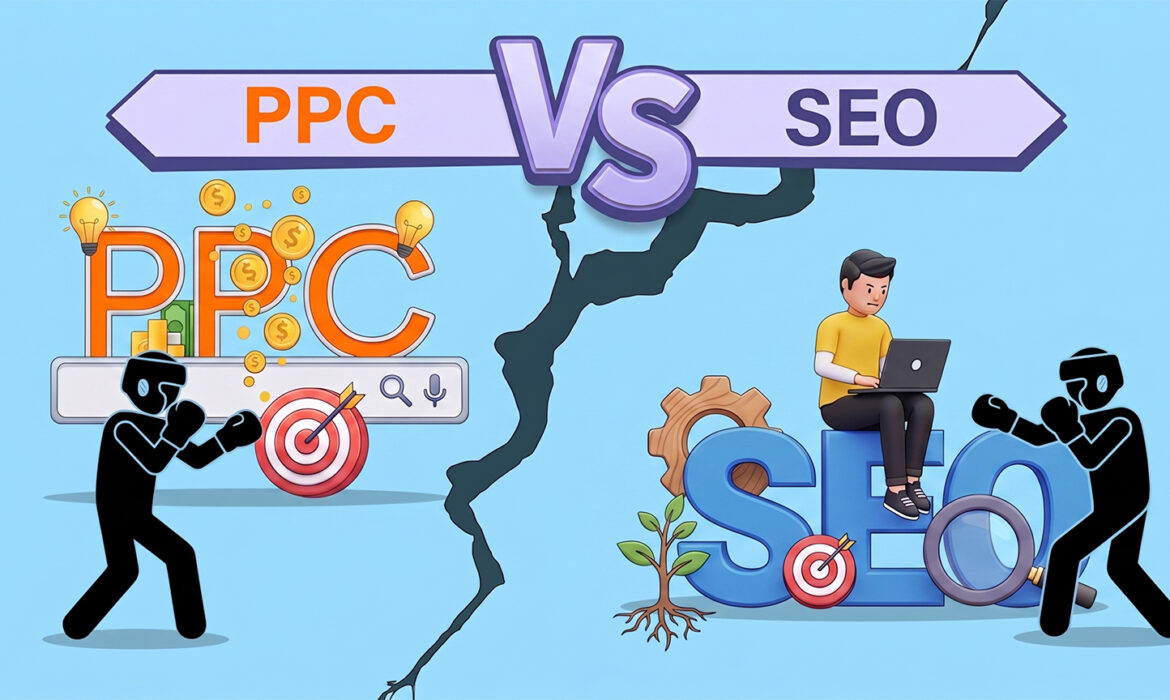
Looking to grow your Amazon business faster? Here’s the quick answer: Amazon SEO builds long-term organic visibility, while Amazon PPC generates immediate traffic and faster conversions. At Sipransh Ecomgrowth, we help brands combine both strategies to create a profitable and scalable Amazon growth system.
Focuses on optimizing Amazon listings, keywords, and content to improve organic rankings on Amazon search results. It takes time but creates consistent, long-term revenue growth.
Paid advertising that puts your products in front of ready-to-buy customers instantly. Best for launches, scaling products, and quick visibility.
| Aspect | Amazon SEO | Amazon PPC |
| Initial Investment | Time + optimization effort | Pay-per-click advertising spend |
| Results Timeline | Gradual growth (3–12 months) | Immediate visibility |
| Long-Term Value | Strong organic ranking | Stops when ads stop |
| Traffic Source | Organic shoppers | Paid traffic |
| Control Level | Algorithm-driven | Highly controllable targeting |
| Best For | Sustainable growth | Fast scaling/launches |
We don’t treat SEO and PPC separately; we build an integrated Amazon growth engine where listing optimization fuels advertising performance, and PPC data strengthens SEO rankings.
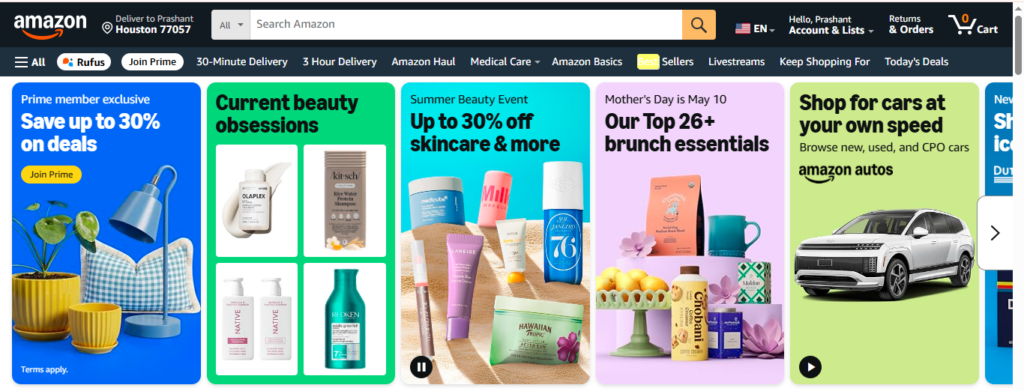
At Sipransh Ecomgrowth, our Amazon SEO strategy is built around understanding how Amazon’s ranking algorithm evaluates products and what drives long-term visibility. Amazon’s search system primarily measures two core factors: relevance and performance signals. This means your product listing must not only match what shoppers are searching for, but it must also demonstrate strong engagement and consistent sales performance to earn higher rankings.
In simple terms, Amazon analyzes how closely your product listing aligns with customer search intent while also reviewing key metrics such as click-through rates, conversion performance, customer satisfaction, and sales consistency. The stronger these signals are, the more likely your products are to appear in top search positions.
Here’s how Sipransh Ecomgrowth helps optimize listings for stronger organic visibility:
Title Optimization
We create keyword-rich, customer-friendly product titles that clearly communicate what the product is while naturally incorporating high-intent search terms. By strategically placing exact-match keywords within titles, we help Amazon quickly identify listing relevance without compromising readability or brand positioning. Our approach ensures titles are optimized for both the algorithm and the shopper.
Content Structure
We build listing content that balances SEO performance with conversion-focused messaging by naturally integrating relevant keywords across every important listing section.
| Listing Element | Focus for Optimization |
| Bullet Points | Highlight product benefits, features, and high-value keywords in a clear, shopper-friendly format |
| Product Description | Deliver detailed, informative content that incorporates relevant search terms naturally |
| Backend Search Terms | Add additional indexing keywords that improve discoverability without cluttering visible content |
| A+ Content | Use enhanced storytelling, visuals, and branded messaging to increase engagement and conversion rates |
Amazon rewards products that sell consistently.
We improve:
When these metrics improve, rankings improve.
Unlike ads, organic ranking keeps working even when the spend is reduced.
Less dependency on paid acquisition means stronger profitability.
Customers naturally trust top organic listings more than sponsored placements.
Strong SEO reduces reliance on aggressive ad budgets.
At Sipransh Ecomgrowth, we focus on ranking products where buyers are already searching.
If SEO builds the foundation, PPC acts like fuel.
Amazon PPC Campaign allows brands to place products directly in front of high-intent shoppers instantly.
Amazon advertising operates on keyword bidding and audience targeting.
Your ads can appear:
This creates immediate visibility.
We manage:
Best for direct conversions and keyword capture.
Ideal for brand awareness and Store traffic.
Perfect for retargeting and competitor audience targeting.
For scaling premium brands beyond traditional PPC.
We optimize:
| Metric | Why It Matters |
| CTR | Measures ad relevance |
| Conversion Rate | Indicates listing strength |
| CPC | Controls acquisition cost |
| ACoS | Measures profitability |
| TACoS | Shows overall ad impact |
| ROAS | Revenue efficiency |
Our goal isn’t simply traffic, it’s profitable traffic.
At Sipransh Ecomgrowth, we believe Amazon growth happens when SEO and PPC work together.
Paid campaigns generate:
Strong PPC often leads to stronger SEO.
Optimized listings improve:
Better listings = better ad efficiency.
If your goal is:
Long-term sustainable growth → Invest in Amazon SEO
Immediate visibility and quick sales → Use Amazon PPC
Maximum marketplace dominance → Combine both
That’s exactly how Sipransh Ecomgrowth helps brands achieve more visibility, more conversions, and more profitable Amazon growth.

Creating an effective Amazon product listing is one of the most important steps in growing your sales on the marketplace. A well-optimized listing not only improves visibility in Amazon search results but also helps convert visitors into paying customers. From keyword strategy to images and pricing, every element of your listing plays a role in improving performance.
Do you want to increase sales on Amazon? To rank higher, get more clicks, and turn browsers into customers, start by improving your product listings. Here’s how:
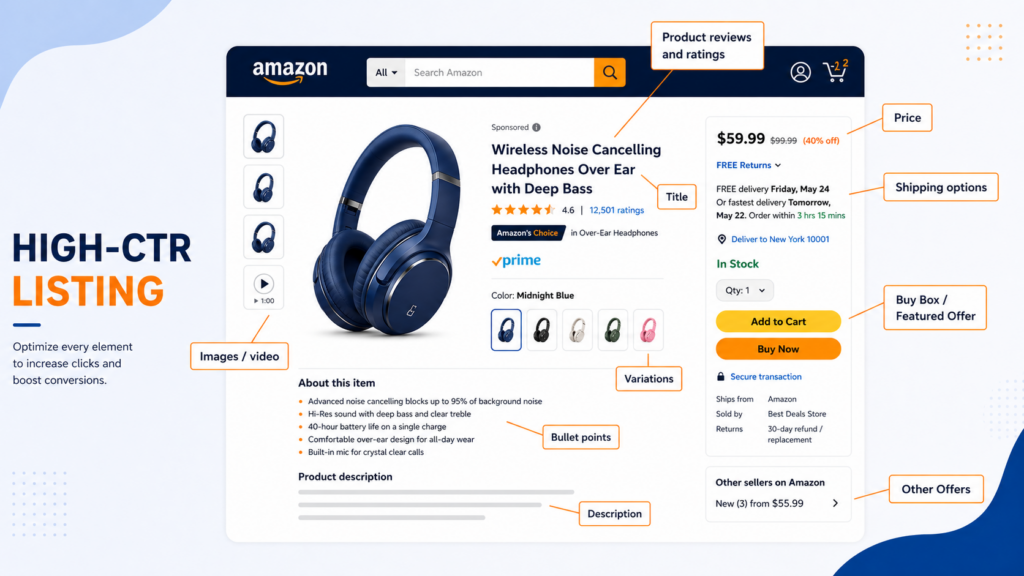
1. Learn How Amazon’s A10 Algorithm Works
To rank higher on Amazon, focus on key ranking factors like sales velocity, organic traffic, customer reviews, CTR, and conversion rate optimization. Amazon tends to reward listings that consistently generate clicks, purchases, and positive shopper engagement over time.
2. Use the Right Keywords Strategically
Conduct in-depth Amazon keyword research using tools like Helium 10 or Jungle Scout. Add high-ranking keywords, long-tail keywords, and backend search terms naturally in your:
Avoid keyword stuffing; readability matters.
3. Create Clear and Optimized Product Titles
Keep Amazon product titles under 200 characters while making them keyword-rich, mobile-friendly, clear, and easy for shoppers to understand quickly.
4. Write Benefit-Focused Bullet Points
Write 5 benefit-driven bullet points using conversion-focused keywords. Highlight:
5. Use Professional Product Images
Improve your Amazon CTR and conversions with:
6. Improve Engagement with A+ Content (Enhanced Brand Content)
Include comparison charts, branded visuals, product storytelling, and informative modules to create a more engaging shopping experience.
7. Competitive Pricing Strategy
Regularly reviewing competitor pricing helps maintain strong product visibility, improve conversions, support sales performance, and increase the chances of winning the Amazon Buy Box.
8. Build Reviews & Ratings
Positive customer ratings and authentic reviews help build trust, improve click-through rates, and encourage more purchases.
9. Monitor & Optimize Continuously
Monitor listing performance regularly and make data-driven updates to improve traffic, customer engagement, and long-term Amazon sales growth.
Conversion rate measures how effectively your Amazon product listing turns shoppers into customers. If visitors click your product but don’t complete a purchase, your listing may need improvements in pricing, images, product content, or overall customer experience. It is one of the most important factors affecting Amazon rankings, visibility, and overall Amazon sales.
While general e-commerce websites average around a 2–3% conversion rate, successful Amazon product listings often achieve higher results due to optimized content and buyer intent. Amazon’s A10 algorithm tends to favor listings with strong conversion performance because higher sales activity signals relevance, customer interest, and a better shopping experience.
Ways to Increase Amazon Conversion Rates
Use this formula:
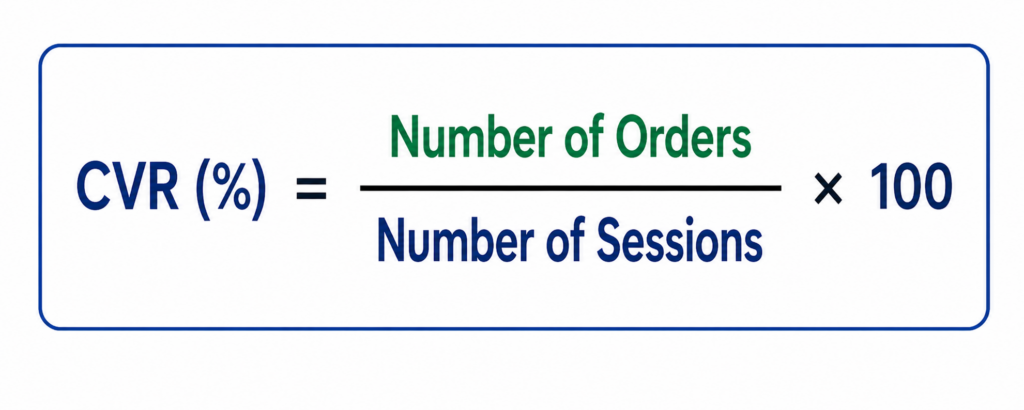
Example: If your listing receives 100 sessions and 10 orders, your conversion rate is 10%. Regularly monitoring conversion rates and optimizing your Amazon listings can help improve customer engagement, increase sales, and support long-term ranking growth.
Amazon’s A10 algorithm ranks product listings based on factors such as relevance, customer engagement, sales performance, and shopper trust, making listing optimization essential for improving visibility and conversions. Strong-performing Amazon listings typically benefit from healthy sales velocity, positive customer reviews, higher click-through rates (CTR), and strong conversion rates, all of which influence product rankings over time. To improve listing performance, sellers should focus on strategic keyword placement in titles, bullet points, descriptions, and backend search terms while keeping content natural and easy to read. Adding high-quality product images, A+ Content (Enhanced Brand Content), and mobile-friendly formatting can help improve customer experience, increase engagement, and support better conversion performance.
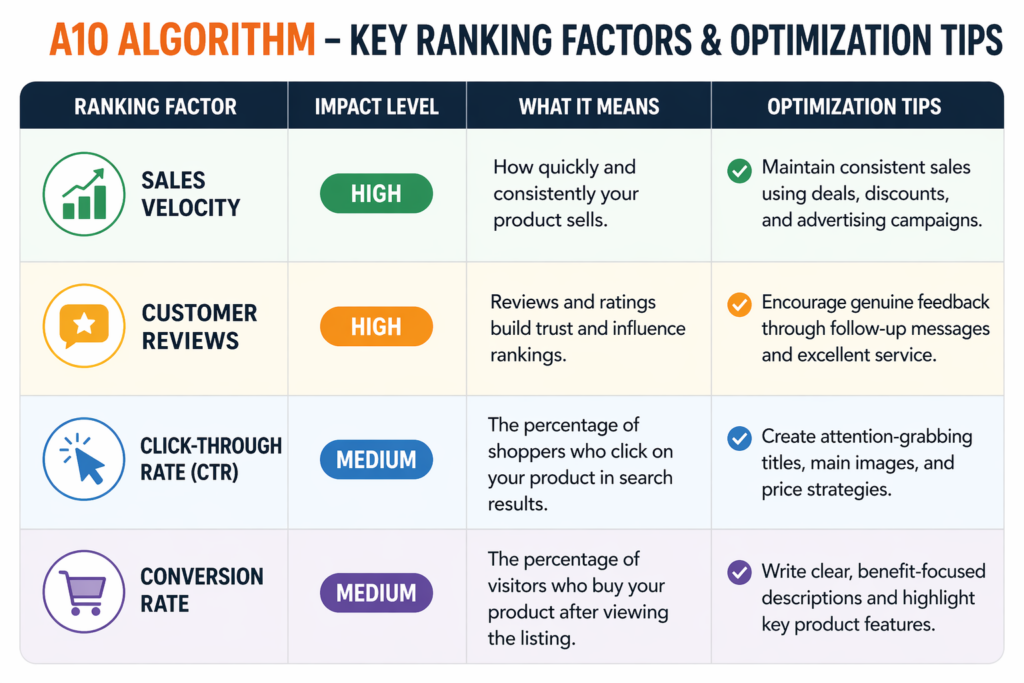
Keywords help Amazon understand when and where your products should appear in search results, making keyword optimization an important part of Amazon SEO. By using high-traffic and smart keywords, you may enhance Amazon SEO and increase the visibility of your products to customers.
Amazon evaluates both front-end keywords, which appear in visible listing content, and backend search terms, which help improve discoverability behind the scenes.
Many Amazon sellers use tools like Helium 10 and Jungle Scout to identify high-search-volume keywords, monitor trends, and discover new ranking opportunities.
One of the most crucial components of your Amazon listing is your product title. It must be both eye-catching and educational since it will be the first thing prospective buyers see.
Key Elements of a Product Title
Use this format to structure your product title for better visibility and stronger customer engagement:
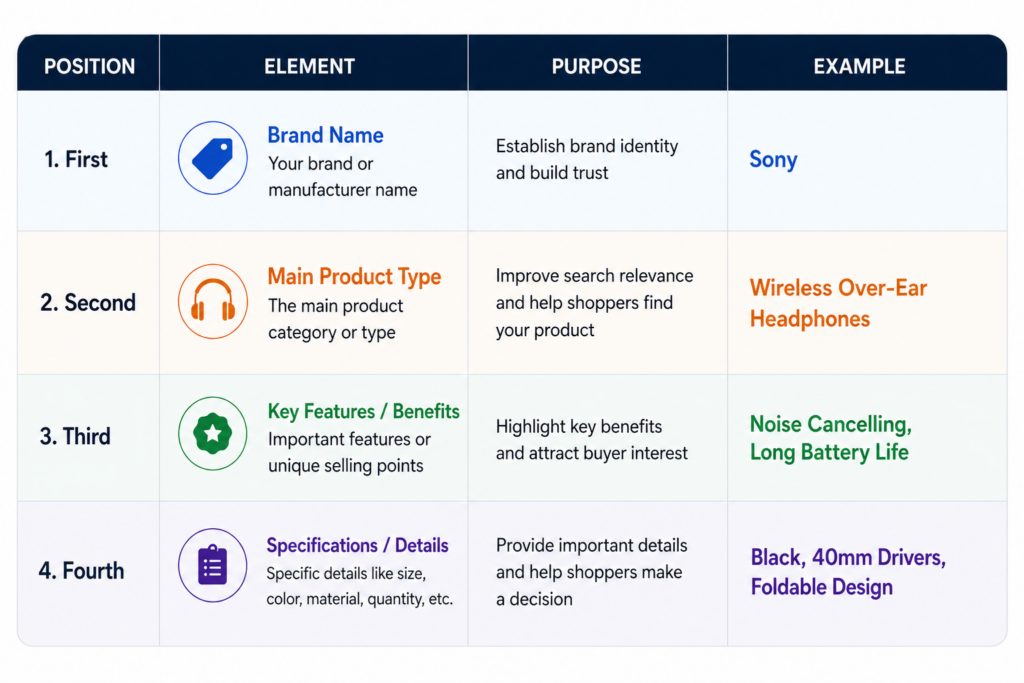
Keep your Amazon product title below 200 characters so it displays properly on both desktop and mobile devices while naturally including high-traffic keywords and important product details.
Balancing Keywords and Readability
The best Amazon product titles balance Amazon SEO with readability. Use high-traffic keywords naturally, place important keywords at the beginning, and avoid keyword stuffing or excessive symbols. The A10 algorithm rewards listings that are both search-friendly and easy for shoppers to read, helping products appear more often in search results and converting more shoppers into buyers.
❌ Poor Example: “Wireless Headphones, Bluetooth Headphones, Noise Cancelling Headphones, Over Ear Headphones.”
✅ Better Example: “Sony Wireless Over-Ear Headphones – Noise Cancelling with Long Battery Life.”
Building Better Bullet Points and Descriptions
After optimizing your product titles, focus on creating clear and informative bullet points. Well-written bullet points help shoppers quickly understand product benefits, improve readability, and make buying decisions faster. Clear bullet point formatting also supports Amazon SEO by improving customer engagement, increasing clicks, and helping listings perform better in search results.
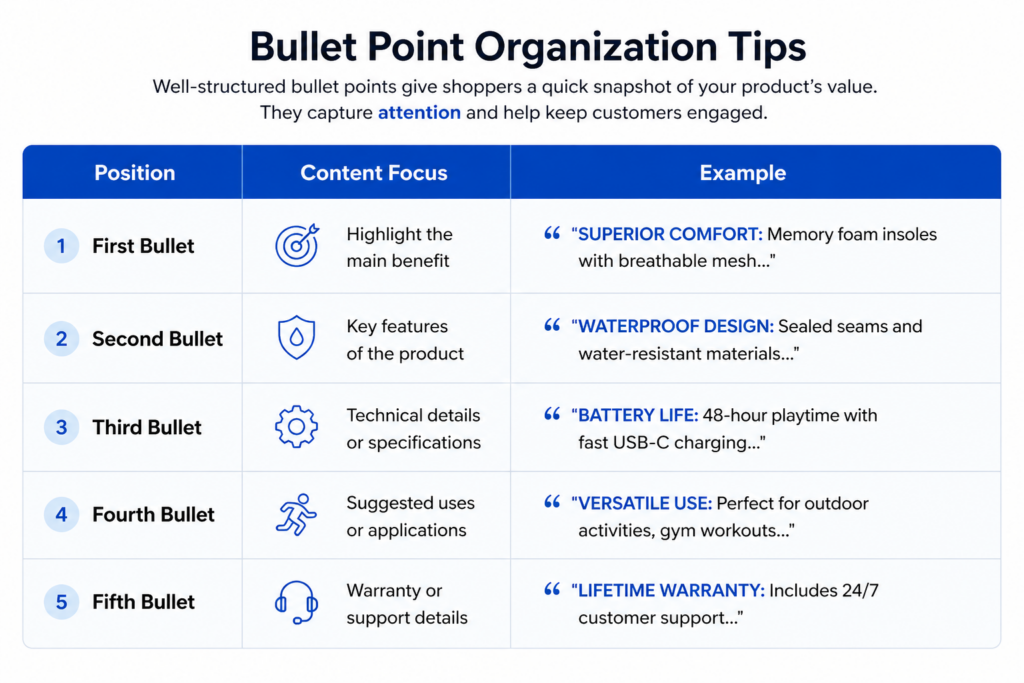
Writing Clear Product Descriptions
Strong bullet points are only the beginning. A detailed product description helps answer common customer questions and gives shoppers the information they need before purchasing on Amazon. Because many customers shop on mobile devices, product descriptions should remain short, easy to scan, and naturally optimized with relevant keywords.
For technical products, organize information into simple sections such as the following:
Adding A+ Content (Enhanced Brand Content) can further improve the shopping experience by making listings more engaging, informative, and visually professional.
1. Comparison Charts – Help shoppers compare product models or variants side-by-side, making buying decisions easier and reducing returns.
2. Brand Storytelling Modules – Share your brand story, highlight unique selling points, and build customer trust naturally.
3. Enhanced Images – Use high-quality images with text overlays to showcase important product features clearly.
4. Lifestyle Images – Show products in real-life situations to help customers visualize using them in everyday life.
5. Better Customer Engagement – Well-designed A+ Content can improve readability, increase shopper confidence, and create a more engaging Amazon shopping experience.
High-quality product visuals play an important role in attracting shoppers, improving click-through rates, and increasing conversions on Amazon.
Optimizing Amazon listings consistently helps maintain product visibility, improve customer engagement, and support long-term sales growth.
Backend Keyword Setup
Backend keywords help improve Amazon SEO without appearing in your visible listing. Use backend search terms strategically by adding relevant keywords, alternative spellings, and related phrases shoppers may use when searching.
Backend Keyword Best Practices
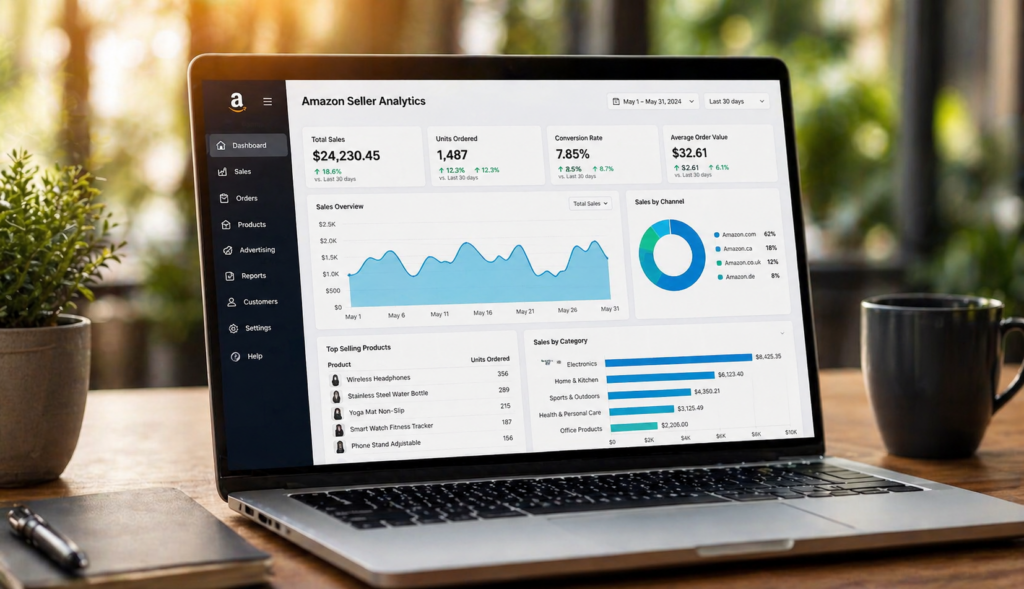
Tracking listing performance is important for improving conversions, increasing sales activity, and maintaining strong product visibility on Amazon. Monitoring your conversion rate helps identify how effectively shoppers are turning into buyers and where your product listings may need improvement.
Key areas to monitor and optimize:
A well-optimized listing with strong images, clear titles, informative bullet points, and relevant keywords can improve customer engagement and support better conversion performance.

Regularly updating your Amazon product listings helps keep them competitive, relevant, and aligned with changing customer search behavior. Consistent listing reviews can also help improve search visibility, maintain rankings, and support long-term sales growth on Amazon.
Key areas to review each month:
Positive customer reviews and strong ratings help build trust, improve click-through rate (CTR), and boost conversions. Providing reliable customer service, responding professionally to feedback, and continuously improving your listings can support stronger long-term performance.
Pricing plays a major role in attracting shoppers, improving conversions, and keeping your Amazon listings competitive within your product category. An effective pricing strategy should balance competitiveness, profitability, and perceived product value.
Competitive Pricing Analysis
Before setting your product price, compare similar Amazon listings based on features, quality, reviews, and overall customer value. Tools like Helium 10 and Jungle Scout can help monitor competitor pricing, track market trends, and identify pricing opportunities that support better conversion rates.
Smart pricing strategies include:
Strategic promotions can increase product visibility, improve click-through rates, and encourage faster purchasing decisions.
Using promotions carefully can help increase sales and visibility, while excessive discounting may reduce perceived product value over time. The goal is to maintain competitive pricing while supporting long-term brand growth, customer trust, and profitability.
Creating high-converting Amazon listings requires the right mix of Amazon SEO, strategic keywords, compelling content, high-quality images, competitive pricing, and continuous optimization. From improving product titles and bullet points to increasing conversion rates, sales velocity, and customer engagement, every detail contributes to stronger Amazon rankings and long-term Amazon sales growth.
At Sipransh Ecommgrowth, we help brands create fully optimized Amazon product listings designed to boost visibility, attract buyers, and improve conversions. Our expertise includes:
With a data-driven strategy and customer-focused approach, Sipransh Ecommgrowth Amazon Agency helps businesses scale faster and achieve sustainable growth on Amazon.