




Struggling with Too Much Inventory on Amazon? Here’s How to Fix It
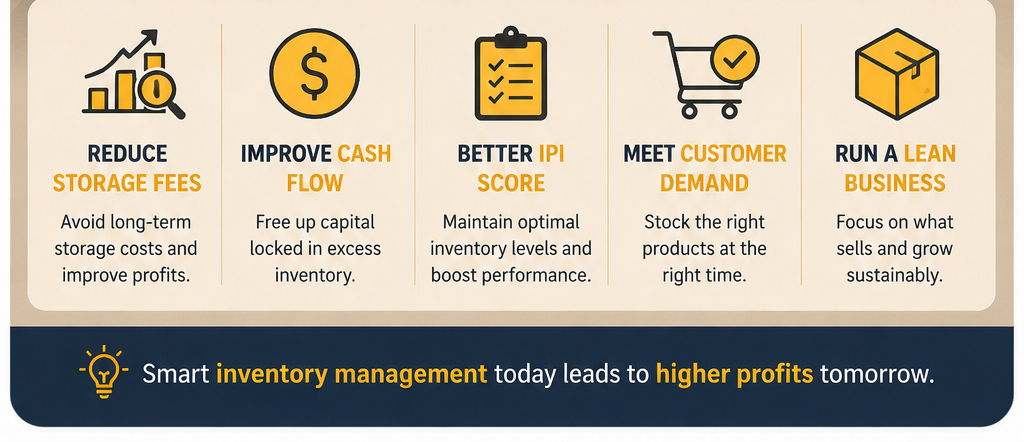
Managing inventory on Amazon can be challenging, especially when products stop selling as quickly as expected. Excess inventory not only increases storage fees but also ties up your cash flow, lowers profitability, and can even affect your Inventory Performance Index (IPI) score.
The good news is that excess inventory can be prevented and managed with the right strategies. By improving forecasting, monitoring stock levels regularly, and using Amazon’s promotional tools wisely, sellers can maintain healthier inventory levels and avoid unnecessary costs.
For expert support with inventory planning and growth strategies, businesses can rely on Sipransh Ecommgrowth to improve stock management, streamline inventory control, and make smarter restocking decisions for long-term Amazon success.
Here are 7 practical ways Amazon sellers can reduce excess inventory and keep their business running efficiently.
Quick Overview of the Strategies
|
Strategy |
Main Benefit | Difficulty Level |
|
Analyze Sales Trends |
Better demand forecasting | Moderate |
|
Perform Regular Inventory Reviews |
Identify slow-moving products early | Easy |
|
Set Accurate Reorder Points |
Prevent overstocking | Easy |
| Prepare for Seasonal Demand | Avoid leftover seasonal stock |
Moderate |
| Remove Poor-Performing Products | Reduce storage costs |
Easy |
| Use Inventory Management Software | Automate inventory tracking |
Advanced |
| Run Clearance & Liquidation Campaigns | Move excess stock faster |
Moderate |

One of the biggest reasons sellers end up with excess inventory is inaccurate demand forecasting. Instead of guessing future sales, sellers should analyze historical sales data to identify buying patterns.
Look closely at:
Using previous sales performance helps sellers make smarter purchasing decisions and avoid ordering more stock than needed.
Accurate forecasting also improves cash flow because money is not tied up in unsold products sitting in Amazon warehouses.

Inventory management should never be a “set it and forget it” process. Conducting regular inventory reviews helps sellers quickly spot underperforming products.
Amazon’s Inventory Health reports can help track the following:
By checking inventory monthly, sellers can identify slow-moving products before long-term storage fees start increasing.
Regular monitoring also allows businesses to adjust future purchase orders based on actual sales performance.

Many Amazon sellers overstock because they reorder inventory too early or purchase large quantities without proper planning.
Setting reorder points helps maintain balanced inventory levels.
A reorder point is the minimum stock level at which new inventory should be ordered. To calculate it properly, sellers should consider the following:
For example, if a product sells 10 units per day and the supplier takes 15 days to deliver inventory, the seller must maintain enough stock to cover those 15 days plus extra safety stock.
This approach reduces the chances of over-ordering while still preventing stockouts.

Seasonal demand can heavily impact Amazon’s inventory management. Products that perform well during holidays or special shopping events may become slow-moving once the season ends.
To manage seasonal inventory effectively:
Events like Prime Day, Black Friday, and holiday shopping periods require careful planning. Sellers who fail to prepare may either run out of stock or end up with excess inventory after demand drops.
Proper seasonal planning helps maintain healthy inventory levels throughout the year.
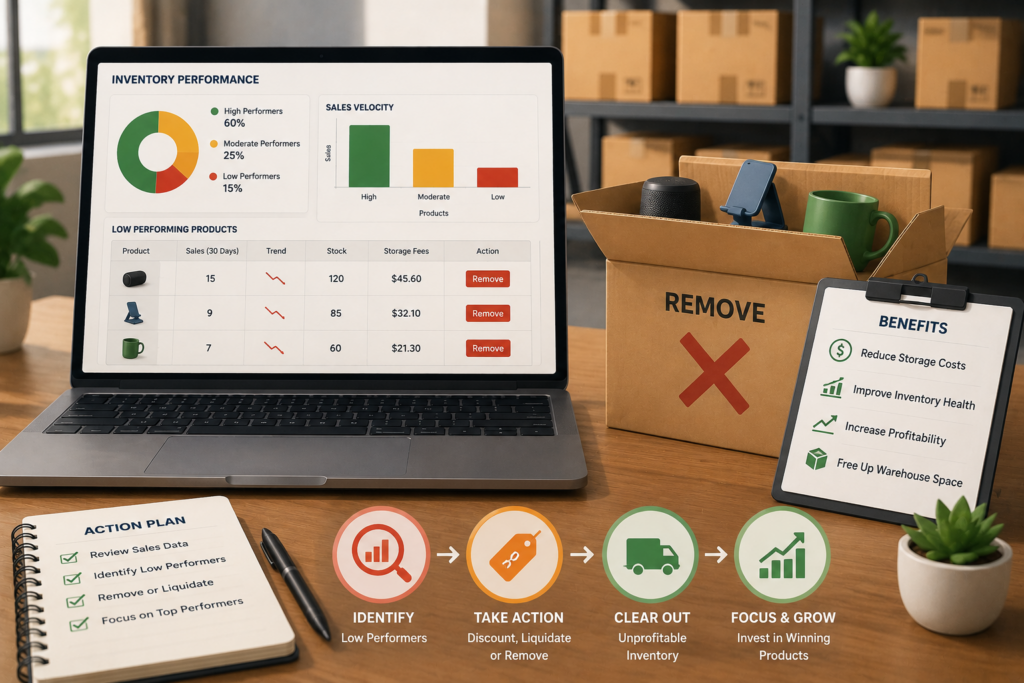
Not every product in your catalog will remain profitable forever. Some products may consistently generate low sales while accumulating storage fees.
Sellers should regularly identify products with:
Once identified, sellers can:
Eliminating underperforming products frees up storage space and allows sellers to focus on products that generate higher profits.
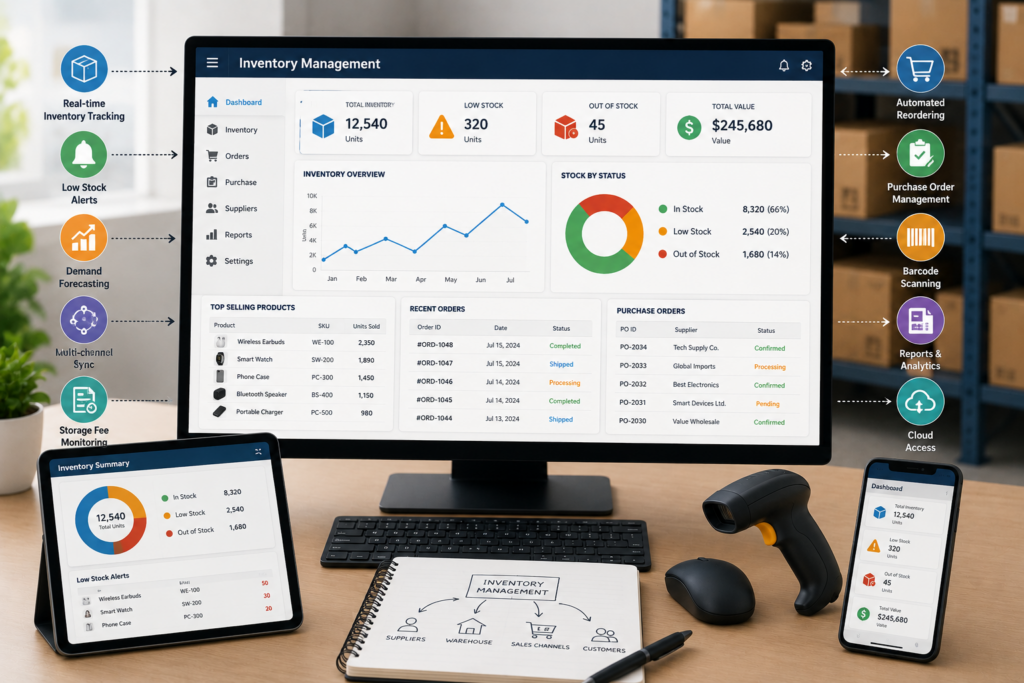
Managing inventory manually becomes difficult as an Amazon business grows. Inventory management software helps automate many important tasks and improves accuracy.
Good inventory tools can help with:
Automation reduces human error and allows sellers to make faster inventory decisions based on real-time data.
For growing Amazon businesses, inventory software can save both time and money while preventing costly overstock situations.
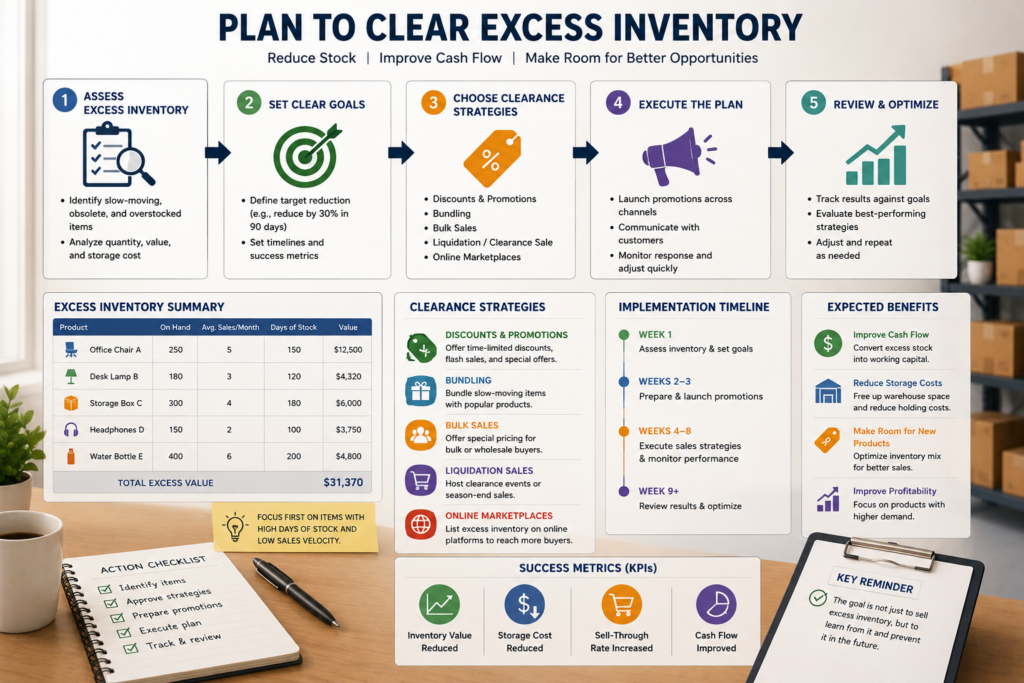
Sometimes, excess inventory is unavoidable. When that happens, sellers need a strategy to clear stock quickly before storage costs continue increasing.
Amazon offers several ways to move excess inventory:
Promotions & Discounts
Amazon Outlet
Amazon Outlet helps sellers promote discounted overstock inventory to bargain-focused shoppers.
FBA Liquidations
Through Amazon’s liquidation program, sellers can recover part of their inventory cost instead of paying ongoing storage fees.
Removal Orders
Sellers can also remove inventory from Amazon warehouses and sell it through other channels.
A proactive clearance strategy helps reduce losses and improve cash flow.
Excess inventory can quickly hurt an Amazon business through rising storage fees, blocked cash flow, and reduced profitability. However, sellers who actively monitor inventory, forecast demand accurately, and take action early can avoid most overstock problems.
The most successful Amazon sellers combine multiple inventory management strategies, including:
By staying proactive, sellers can maintain healthier inventory levels, improve profitability, and build a more sustainable Amazon business in the long run.