



If someone claims that ChatGPT or AI isn’t helpful, they’re probably not being entirely truthful. No matter how they try to frame it, AI is a potent tool, that is especially for Amazon sellers. As an Amazon agency, we’ll admit it: AI could probably take over a lot of what we do. But that doesn’t scare us, in fact, we’re all in on the idea that AI is a totally game-changer for those selling on Amazon.
Now, don’t get us wrong, we’re not saying AI should replace people. Not at all. Your job is safe (for now). The human mind? Still unmatched, and there’s a good reason for that!
Fact: ChatGPT can’t replace human intelligence.
Also fact: It’s incredibly useful for tasks like drafting product descriptions, ad copy, and listing optimization.
Myth: ChatGPT will completely take over your Amazon listing process.
Fact: It can save you tons of time on writing and research.
Also, fact: It won’t make the strategic calls that you, as a seller, need to handle.
Myth: AI will run your Amazon business all by itself.
Fact: ChatGPT can generate solid product descriptions in moments.
Also, fact: It can’t replicate the unique creativity and perspective that comes from your experience.
Myth: AI delivers flawless, on-brand copy every single time.
Fact: ChatGPT helps speed up repetitive tasks.
Also, fact: It doesn’t fully grasp your brand’s personality or voice.
Myth: ChatGPT will manage your Amazon marketing without your input.
Nowadays AI is part of everyday life. More Amazon sellers (and agencies like ours) are tapping into AI tools like ChatGPT to enhance Amazon SEO optimization. And honestly, why not? If you haven’t started using it yet, you’re missing a major advantage.
ChatGPT works great for brainstorming, writing draft descriptions, and generating product titles. But here’s the catch, you shouldn’t lean on it entirely.
I’m a big fan of using AI to jumpstart the creative process. Whether it’s helping me structure my ideas or giving me a rough draft to work from, it’s a huge time-saver. That said, editing and refining are essential. However, while ChatGPT provides a helpful starting point, the tone can sometimes feel a bit too mechanical. Additionally, since it pulls from a wide range of sources, it might not always match your unique voice. That’s why a human touch is critical.
Use ChatGPT as your assistant, but don’t let it do all the work. Skipping the review step can leave you with content that sounds flat or overly generic. Want listings that truly stand out? Make sure they reflect your brand’s personality. Inject your style, polish the wording, and ensure the message resonates with your customers.
Think of it like making a dish from a recipe. You’ve got all the ingredients; however, without a cook, it’s just a bunch of raw elements. ChatGPT gives you the basic instructions, but you’re the one who brings the flavor.
If you ask ChatGPT for a generic “product description,” don’t be surprised when it spits out something bland. Instead, get specific. Tell it about your target audience, their challenges, and how your product provides a solution. The more detail you give, the better the output. You’re not just writing copy, you’re speaking directly to a shopper’s needs.
Tip: Try showing the difference between a vague vs. a detailed prompt to really see how tailored the result can be.
Avoid dumping an entire listing request in a single prompt. Break it down. Start with bullet points, then use those to build your product description. Want bullets? Tell ChatGPT exactly what you want each point to focus on, whether it’s features, materials, or benefits. You’re the editor here; structure the content how you want.
Telling ChatGPT to act like the best copywriter on Earth usually leads to over-the-top, salesy fluff. Instead, ask for a tone that’s conversational or friendly. A simple prompt like “Write this in an approachable tone” will usually give you much more natural-sounding results.
Example: Aim for a tone that matches your brand, not a cheesy infomercial.
Capitalizing Every Word in Your Product Title? It’s harder to read and unnecessary. Stick to sentence case for clarity and readability, like “Portable solar power bank with 10,000mAh capacity.” You can even have ChatGPT write it in sentence case for you.
Your brand has its own style. Whether you’re fun and casual or sleek and professional, make sure the tone fits. ChatGPT can try to match tone, but it needs direction. Say something like, “Write this in a cheerful, eco-conscious tone” or “Use a clean and technical voice.”
ChatGPT tends to fall back on the same lines, like “unleash potential” or “take your grilling to the next level.” They sound flashy, but they’re overused. Replace them with specific benefits or features your product offers. Real details stand out more than empty hype.
While ChatGPT can provide a solid base, remember that its data isn’t always current. It may not know about new Amazon policies, product trends, or customer behavior from the last couple of years. Always fact-check stats or claims before using them in your listing.
You’ve probably seen ChatGPT start things with “Here at XYZ Company…” but that’s unnecessary. Shoppers already know what page they’re on. Cut to the chase, focus on what your product does for them, not a corporate introduction.
It’s easy to get generic content if your prompt isn’t specific. Instead of asking for a “fun toy description,” tell ChatGPT exactly what features matter, like safety, eco-friendliness, or age-appropriate play. You’ll get something much more personalized and valuable.
Think of ChatGPT as your creative partner. Use it to spark ideas, list features, or build out rough drafts. But don’t expect it to write your full listing from start to finish. That’s still your job, or something you can outsource to professionals who specializes in Amazon product listing optimization.
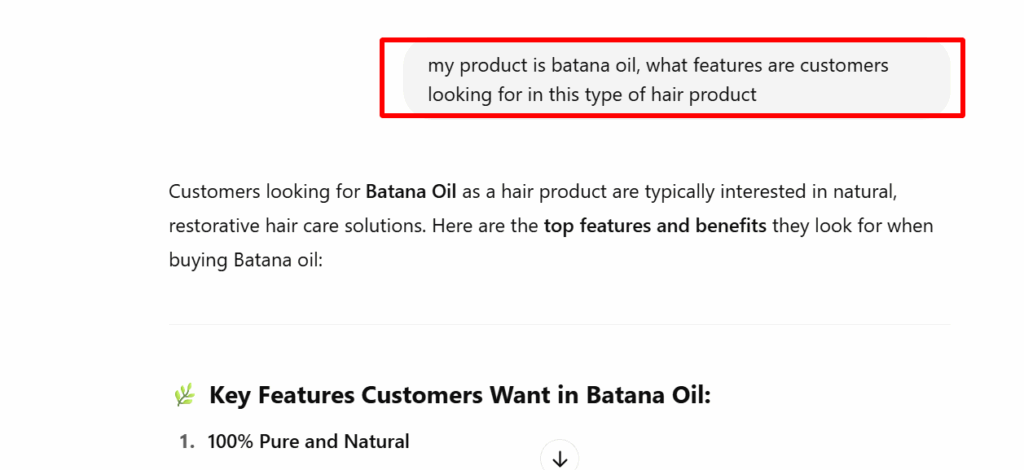
By combining AI with your personal touch or hiring an expert, you get the best of both worlds: speed and strategy.
It’s easy to highlight how great your product is, but don’t forget the shopper. ChatGPT often leans heavily into describing the product itself instead of how it benefits the customer. Try rephrasing features with the user in mind. Instead of saying, “This mug is microwave-safe,” go with something like, “Reheat drinks easily without worrying about messes thanks to this microwave-safe design.” That small shift makes the product feel more relevant to the buyer.
While ChatGPT can be great at summarizing, it might skip over specifics unless you prompt for them. Rather than asking it for “main features,” tell it to give detailed benefits. If you’re writing about a blender, request things like motor wattage, blade type, and number of speed options. Clear instructions lead to more informative, buyer-friendly results.
People on Amazon aren’t there to read paragraphs, they want quick, useful info. ChatGPT can help lay the groundwork, but it’s up to you to keep the text punchy. Ask for short, simple sentences that deliver the message fast. For instance, instead of writing, “This high-quality kitchen knife is made from durable stainless steel and designed for long-term performance in any kitchen,” go for: “Sharp, durable, and made from stainless steel, perfect for everyday cooking.”
You can use ChatGPT to review feedback from your own products, or your competitors’, and quickly uncover patterns. It can highlight common praises and complaints without the need to read every review yourself.
How to use it: Copy and paste a series of reviews into ChatGPT and ask for a summary of key themes. Want to tailor your product copy to better match customer concerns? ChatGPT can help shape bullet points, listings, or ad text around the most talked-about topics.
Sample prompt: “Customers are saying things like, ‘The charger failed after just a week.’ How can I reassure buyers about the product’s durability in my listing?”
If your product has more than one function, ChatGPT can help you uncover all the ways it might be used. No need to spend time listing them yourself.
How to use it: Provide ChatGPT with your product’s main features, and ask for a list of possible use cases. This works especially well for items like tools, gadgets, or home essentials.
Sample prompt: “Tell me different ways someone might use a multi-functional kitchen blender.” ChatGPT could respond with: “1. Blend smoothies. 2. Crush ice. 3. Prepare sauces. 4. Grind nuts. 5. Puree baby food.”
Not sure who your product is for? ChatGPT can analyze the features and benefits and help you pinpoint your target customer profile.
How to use it: Share a short description of your product, and ask ChatGPT to outline the most likely customer demographics and lifestyles that match.
Sample prompt: “Who is the best target audience for a compact solar power bank?” The response might be: “Remote workers, hikers, and travelers looking for eco-friendly charging options.”
Tired of writing the same replies over and over? ChatGPT can help draft answers to customer questions, saving time while maintaining quality communication.
How to use it: Drop the customer’s question into ChatGPT and ask for a helpful, polite reply. You may still need to tweak it slightly, but it’s a solid starting point.
Sample prompt: “What’s the best way to respond when someone asks if the power bank works with iPhones?” You might get: “Absolutely! Our power bank works seamlessly with all iPhone models using the provided cable.”
Creating step-by-step instructions from scratch can be time-consuming. ChatGPT can craft easy-to-follow guides based on your product’s use.
How to use it: Feed ChatGPT the main functions and setup steps, and let it generate a clear, user-friendly guide, especially useful for tech and DIY products.
Sample prompt: “Write a setup and cleaning guide for a portable coffee maker.” A typical response might be: “1. Connect the water tank. 2. Add coffee to the filter. 3. Press the brew button. To clean, rinse all removable parts and wipe the machine clean.”
Looking to increase order value? ChatGPT can offer ideas for products that pair well together and help 2you write descriptions to promote bundles.
How to use it: Describe your main product, and ask for compatible add-ons to bundle. You’ll also get suggestions for how to market the combo.
Sample prompt: “What products could I bundle with my stainless steel water bottle?” It might recommend: “Try adding a travel mug, snack bars, or a gym towel for a wellness-focused bundle.”
Crafting ad copy that converts can be tricky. ChatGPT can help by quickly generating concise, compelling ads that highlight your product’s value.
How to use it: Give details about your product, benefits, and audience, and ChatGPT will deliver ad copy you can refine and test.
Sample prompt: “Write an ad for noise-canceling headphones aimed at commuters.” You could get something like: “Shut out the chaos. Our noise-canceling headphones help you relax and focus, whether you’re commuting or working remotely.”
Not sure what to post on social media? ChatGPT can put together a full content schedule, complete with ideas and captions.
How to use it: Tell ChatGPT your product and marketing goals, and ask for a 30-day content plan, including tips on engagement and posting times.
Sample prompt: “Give me a month of Instagram content ideas for my new smartwatch, with captions.” You’ll get daily prompts like: “Day 3 – Showcase the fitness tracking feature. Caption: ‘Track your goals, one step at a time.’”
Setting the right price can be challenging. ChatGPT can help you weigh competitors, product quality, and demand to suggest optimal pricing.
How to use it: Provide your product details and share competitor pricing, and ask for a strategic price range.
Sample prompt: “What’s a good price for my wireless speaker if others range from $30 to $50?” ChatGPT may say: “Set your price at $39.99 to stay competitive while positioning your product as a premium value.”
Want insights into what your competitors are doing? ChatGPT can break down their reviews and listings to uncover strengths and weaknesses.
How to use it: Paste in review samples or listing text, and ask ChatGPT to analyze what’s working and what’s not. Then, apply these insights to your own listings.
Sample prompt: “What can I learn from Brand X’s customer reviews to improve my listing?” ChatGPT might answer: “Buyers love their 2-year warranty, but dislike the packaging. Highlight your strong packaging and consider offering a similar warranty.”
So, can Amazon sellers are actually useing ChatGPT to create listing content? Absolutely, but with a big caveat.
It only works well if you’re already well-versed in Amazon’s strict guidelines (and yes, there are a ton of them). For example, if ChatGPT includes a prohibited term like “antibacterial” in a cleaner’s description, your listing could be flagged. Likewise, if it generates a title that exceeds Amazon’s 200-character limit, you might face listing issues.
If you’re confident in your knowledge of Amazon’s policies, ChatGPT can be a powerful content creation tool. But if you’re not 100% sure about compliance rules, don’t sweat it, our team of Amazon experts is here to ensure your listings stay fully optimized and within Amazon’s terms.