


The industrial products market is challenging and fiercely competitive, with companies needing to cater to niche customer segments while standing out in crowded marketplaces. For a company specializing in industrial cleaner degreasers, wood fence stains & sealers, bio-polyurethane stain & sealers, concrete sealers, and concrete etchers, the struggle to scale their Amazon presence was becoming increasingly evident.
When this company approached us, they faced stagnant sales, low conversion rates, and an unsustainably high Advertising Cost of Sales (ACoS). Despite having high-quality, eco-friendly products with unique benefits, they struggled to reach and convert their target audience effectively.
Our Amazon marketing agency stepped in to overhaul their Amazon strategy, addressing their key challenges and unlocking their potential for growth. Through a combination of targeted actions and consistent optimization, we helped the brand achieve significant milestones.
This case study provides a detailed overview of the challenges faced, the actions we took, and the results that followed.
Challenges
The brand was dealing with several pressing challenges that limited its ability to thrive in the competitive industrial products sector.
Actions
Our approach combined strategic advertising, listing optimization, and continuous monitoring to address the challenges and create a sustainable path for growth.
1. Comprehensive Listing Optimization
We started by overhauling the product listings to ensure they were appealing, informative, and search-engine optimized:
2. Strategic PPC Campaigns
We restructured their advertising campaigns to maximize efficiency and drive qualified traffic:
Sponsored Product Ads: We initially launched campaigns targeting high-performing keywords identified through research.
For Sponsored Brand Ads, we designed engaging creatives with custom banners to drive traffic to the storefront and increase brand awareness.
>Meanwhile, Sponsored Display Ads were used with competitor targeting strategies to place products directly on competitor detail pages.
Negative Keywords: Finally, we introduced a negative keyword strategy to remove irrelevant clicks, reduce wasted spend, and improve ROI.
3. Competitor Analysis and Keyword Domination
To outmaneuver competitors, we conducted a detailed analysis of their advertising strategies and customer preferences:
4. A+ Content and Enhanced Brand Story
We created engaging A+ Content to elevate the brand’s listings. Additionally, we designed comparison charts that showcased how the brand’s products outperformed competitors in terms of quality, eco-friendliness, and performance. Moreover, we included detailed usage instructions to guide customers on how to use the products for maximum effectiveness. Furthermore, we developed lifestyle images that displayed the products in real-world settings, helping customers better visualize their applications.
5. Building Customer Trust Through Reviews
We implemented strategies to increase the volume and quality of reviews:
6. Continuous Monitoring and Optimization
To ensure consistent progress, we monitored key performance metrics and adjusted our strategies as needed. This included analyzing click-through rates (CTR), cost-per-click (CPC), conversion rates, and return on ad spend (ROAS) to fine-tune the campaigns regularly.
Benefits
The implementation of these strategies delivered a wide range of benefits to the brand:
Increased Visibility
By targeting relevant keywords and leveraging Sponsored Ads effectively, the brand achieved higher search rankings. As a result, this drove a significant increase in impressions and clicks.
Higher Conversion Rates
Additionally, optimized listings and A+ Content created a more compelling shopping experience. Consequently, this led to improved conversion rates.
Cost Efficiency
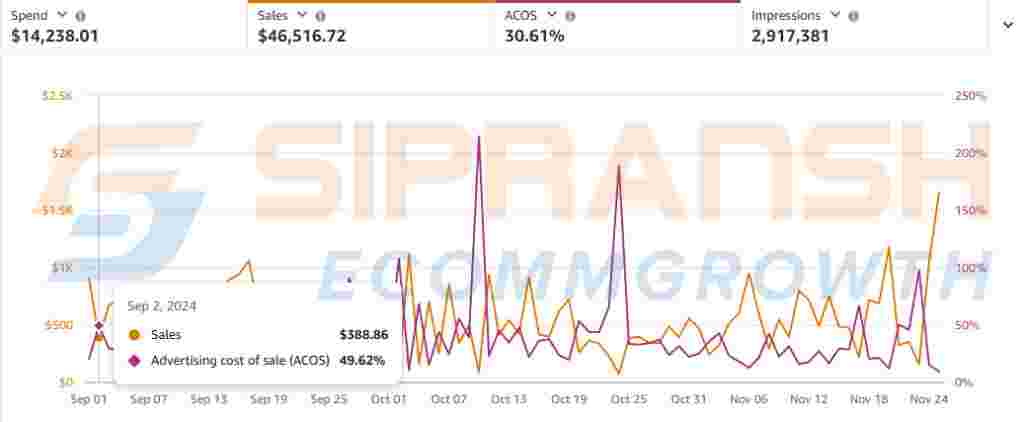
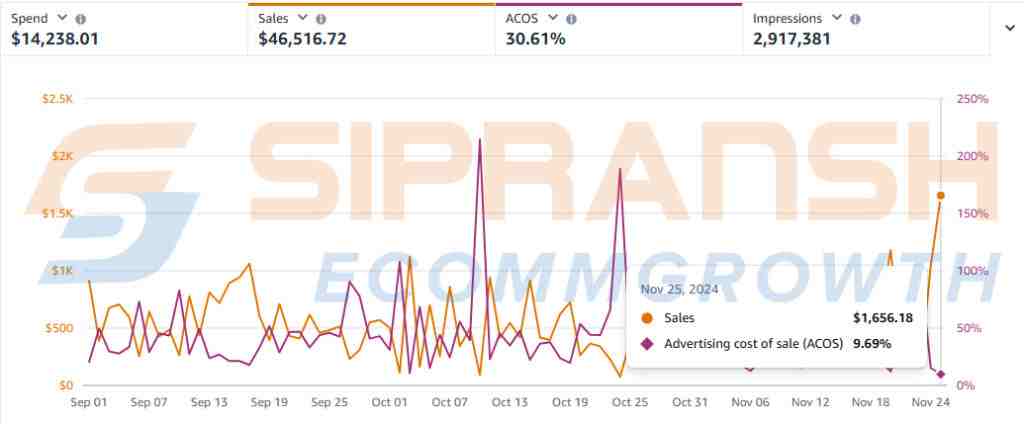
Moreover, the introduction of negative keywords and ongoing campaign optimization reduced wasted ad spend. As a result, ACoS decreased from 49.62% to just 9.69%.
Competitive Edge
Furthermore, by targeting competitor product pages and leveraging superior content, the brand gained a strong advantage in a crowded market.
Enhanced Customer Trust
Finally, increased reviews and engaging A+ Content helped build trust with potential buyers. Therefore, this fostered loyalty and encouraged repeat purchases.
Results
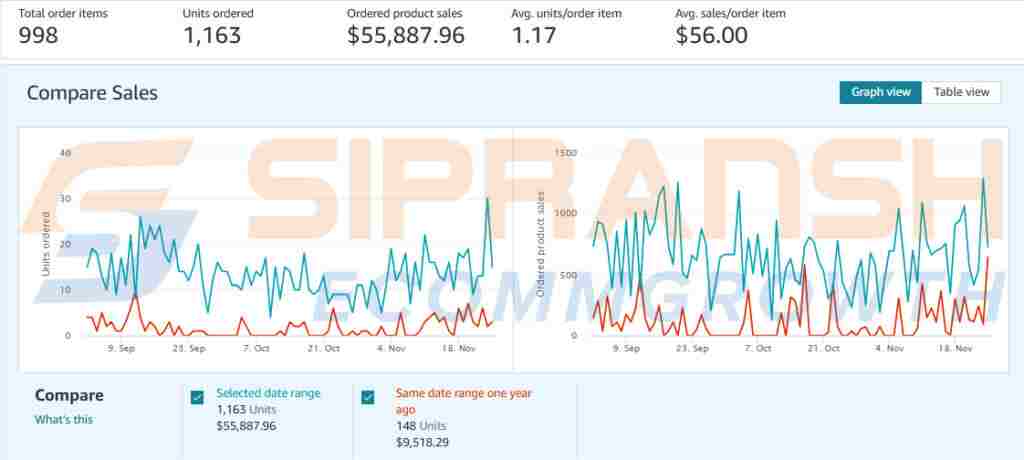
This case study highlights the transformative impact of strategic e-commerce management on Amazon. By addressing the brand’s core challenges, optimizing their presence, and leveraging data-driven advertising strategies, we turned a struggling Amazon account into a thriving business.
Whether you’re a niche brand looking to scale or an established player aiming for greater efficiency, our Amazon marketing agency has the expertise to help you achieve your goals. Let’s build your success story together!