



U.S. Customs and Border Protection (CBP) is actively holding and returning shipments at U.S. ports under a new enforcement program called “5H” (Entry Processing Hold). Sellers with documentation issues, cargo undervaluation, or invalid importer bonds are facing hundreds to thousands of dollars in daily demurrage fees.
Amazon Global Logistics (AGL) shipments are built to keep you compliant, with customs clearance included in every shipment, and no additional hidden fees or extra steps required, unlike many freight forwarders who bill these services separately. AGL rates adjust based on real-time market trends, so you get competitive pricing alongside built-in compliance.
Benefits of shipping with AGL include:
Catch issues before they reach the port. Our customs team reviews your declarations, invoices, and packing lists at origin, not at the port of entry.
Ensure your documentation is complete. AGL processes power of attorney and all required import documentation for every shipment.
Get end-to-end customs clearance. We handle import registration, bond processing, declaration filing, and clearance so you can focus on your business, not compliance.
Build inventory buffers. Pre-stock with Amazon Warehousing & Distribution (AWD) to protect your supply chain against disruption.
Replenish faster with AGL Air Freight (7–10 days) for urgent inventory needs, or plan with AGL Fast Ocean (30–45 days) for cost-effective restocking. Transit times are estimates and may vary based on origin, destination and carrier schedules.
AGL’s compliance and customs clearance benefits apply across all product categories, there are no category-based restrictions. Some product types may be more likely to trigger CBP exams regardless of shipping method.
AGL is designed to prevent 5H holds, but in the event a shipment is still held, financial liability for demurrage rests with the importer of record, which would be you, the seller.
To get started with AGL, follow these steps:
For more information, go to Amazon Global Logistics.
Need Help Keeping Your Amazon Shipments Running Smoothly?
At SIPRANSH ECOMMGROWTH, we help Amazon sellers stay ahead of logistics and compliance challenges. From optimized listings and account management to the latest Amazon shipping updates and AGL strategies, our team ensures your business avoids costly delays and scales with confidence. Don’t just react to Amazon updates. use them to grow smarter and faster.
Our free live Ask Amazon events allow you to get quick answers to your questions about selling with Amazon.
On Wednesday, May 27, from 8:00 a.m. – 5:00 p.m. Pacific Time, we’re hosting an Ask Amazon event dedicated entirely to Prime Day readiness.
Submit your questions now and get direct answers from the Amazon Ads, listing optimization, and returns teams.
To participate, follow these steps:
To submit your questions or attend the event, go to Ask Amazon Monthly Series: Prime Day Readiness.
Ready for Prime Day Success?
At SIPRANSH ECOMMGROWTH, we help Amazon sellers prepare for high-traffic events with smart strategies that drive real results. From Prime Day planning and PPC optimization to listing improvements and inventory management, our team helps you stay ahead of the competition and maximize every sales opportunity.

Amazon FBA (Fulfillment by Amazon) provides sellers with an efficient and seamless way to deliver products to customers. However, Amazon charges pick and pack fees for every order fulfilled through their FBA program, and these fees can add up quickly. If not managed correctly, they can significantly impact your profit margins. By optimizing your packaging, monitoring weight and dimensions, and resolving discrepancies, you can minimize these fees and keep more money in your pocket. In this blog, we’ll discuss three proven strategies to lower Amazon pick and pack fees and help you save on costs.

Whether you are a private-label seller or a reseller, one of the most effective ways to reduce pick-and-pack fees is by optimizing your product’s weight and dimensions. Amazon calculates these fees based on the size and weight of your product (ASIN), so it’s essential to keep your product within the smallest possible tier.
For example:
This disparity highlights the importance of smart packaging to stay in the lowest weight and dimension tiers. Pick and pack fees often account for 20% or more of overall selling costs, so reducing these fees will have a substantial impact on your profit margins.
How to Package Smartly:
1. Rethink Your Packaging:
2. Eliminate Unnecessary Packaging Air:
3. Examples of Smarter Packaging:
Remember, once the product reaches the customer, it will arrive in Amazon-branded packaging (a box or envelope). Your goal is to get the product to Amazon warehouses in the most efficient, cost-effective way possible.

While optimizing your packaging is essential, it’s equally important to track and audit your ASIN’s weight and dimensions regularly. Even if you package your product correctly, errors or discrepancies can occur over time that may lead to higher FBA fees.
Amazon periodically scans products in their warehouses to update weight and dimension data. If an error occurs during this process, it can lead to increased pick and pack fees. For example:
Why Monitoring Is Crucial:
1. Avoid Overcharges:
2. Identify Errors Proactively:
Steps to Track and Correct Weight Discrepancies:
1. Measure and Record ASIN Dimensions:
2. Regularly Audit FBA Data:
3. Take Action to Fix Discrepancies:
4. Request Amazon FBA Reimbursements:
By staying proactive, you can stop overcharges, claim refunds, and ensure you’re only paying for accurate pick and pack fees.

Many Amazon sellers overlook FBA discrepancies, leaving money on the table. These discrepancies occur when inventory gets lost, damaged, or overcharged with fees in Amazon warehouses. If you don’t audit and address these issues, it can lead to unnecessary financial losses.
Types of FBA Discrepancies:
1. Inventory Losses:
2. Inbound Shipment Errors:
3. Fee Overcharges:
How to Claim Amazon FBA Reimbursements:
1. Audit Your Account Regularly:
2. Understand Amazon’s Policies:
3. Open Reimbursement Cases:
The Impact of Recovering FBA Discrepancies:
By addressing discrepancies, you not only reduce unnecessary fees but also recover funds that can be reinvested into your business for growth, such as launching new products or boosting Amazon PPC campaigns.
Final Thoughts
Minimizing Amazon pick and pack fees is essential for maintaining healthy profit margins and improving your overall business performance on Amazon. By optimizing your product packaging, diligently tracking FBA weight and dimensions, and efficiently managing FBA discrepancies, you can significantly reduce unnecessary costs and reinvest those savings into growing your business.
At SIPRANSH ECOMMGROWTH, we specialize in helping Amazon sellers like you optimize their operations and maximize profitability. Our expertise in Amazon SEO, Amazon listing optimization, and strategic growth solutions ensures that your business thrives in the competitive e-commerce landscape. Partner with us today to streamline your processes, recover lost profits, and achieve sustainable success on Amazon.

Struggling with Too Much Inventory on Amazon? Here’s How to Fix It
Managing inventory on Amazon can be challenging, especially when products stop selling as quickly as expected. Excess inventory not only increases storage fees but also ties up your cash flow, lowers profitability, and can even affect your Inventory Performance Index (IPI) score.
The good news is that excess inventory can be prevented and managed with the right strategies. By improving forecasting, monitoring stock levels regularly, and using Amazon’s promotional tools wisely, sellers can maintain healthier inventory levels and avoid unnecessary costs.
For expert support with inventory planning and growth strategies, businesses can rely on Sipransh Ecommgrowth to improve stock management, streamline inventory control, and make smarter restocking decisions for long-term Amazon success.
Here are 7 practical ways Amazon sellers can reduce excess inventory and keep their business running efficiently.
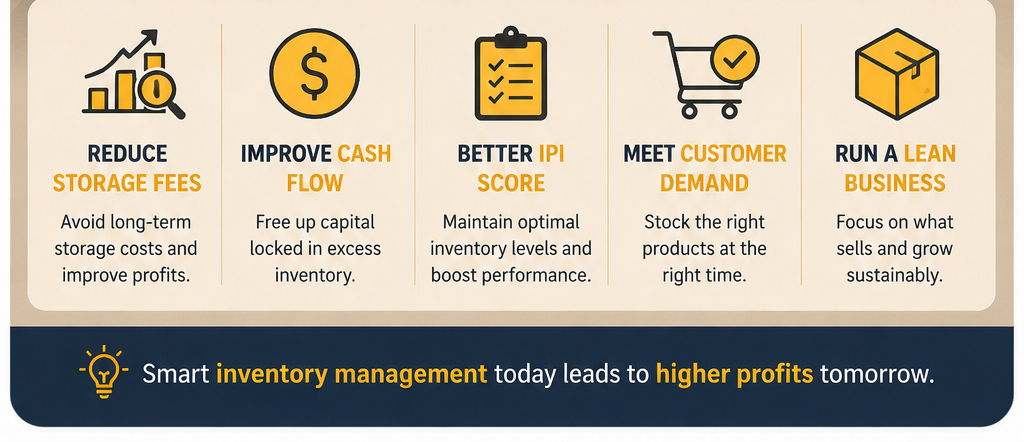
Quick Overview of the Strategies
|
Strategy |
Main Benefit | Difficulty Level |
|
Analyze Sales Trends |
Better demand forecasting | Moderate |
|
Perform Regular Inventory Reviews |
Identify slow-moving products early | Easy |
|
Set Accurate Reorder Points |
Prevent overstocking | Easy |
| Prepare for Seasonal Demand | Avoid leftover seasonal stock |
Moderate |
| Remove Poor-Performing Products | Reduce storage costs |
Easy |
| Use Inventory Management Software | Automate inventory tracking |
Advanced |
| Run Clearance & Liquidation Campaigns | Move excess stock faster |
Moderate |

One of the biggest reasons sellers end up with excess inventory is inaccurate demand forecasting. Instead of guessing future sales, sellers should analyze historical sales data to identify buying patterns.
Look closely at:
Using previous sales performance helps sellers make smarter purchasing decisions and avoid ordering more stock than needed.
Accurate forecasting also improves cash flow because money is not tied up in unsold products sitting in Amazon warehouses.

Inventory management should never be a “set it and forget it” process. Conducting regular inventory reviews helps sellers quickly spot underperforming products.
Amazon’s Inventory Health reports can help track the following:
By checking inventory monthly, sellers can identify slow-moving products before long-term storage fees start increasing.
Regular monitoring also allows businesses to adjust future purchase orders based on actual sales performance.
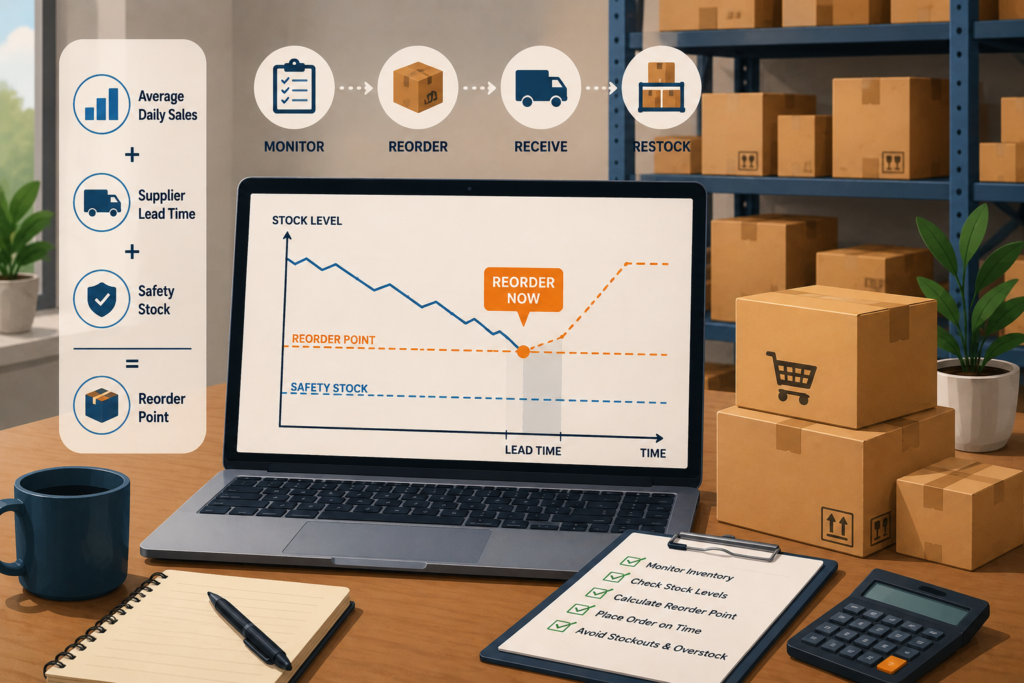
Many Amazon sellers overstock because they reorder inventory too early or purchase large quantities without proper planning.
Setting reorder points helps maintain balanced inventory levels.
A reorder point is the minimum stock level at which new inventory should be ordered. To calculate it properly, sellers should consider the following:
For example, if a product sells 10 units per day and the supplier takes 15 days to deliver inventory, the seller must maintain enough stock to cover those 15 days plus extra safety stock.
This approach reduces the chances of over-ordering while still preventing stockouts.

Seasonal demand can heavily impact Amazon’s inventory management. Products that perform well during holidays or special shopping events may become slow-moving once the season ends.
To manage seasonal inventory effectively:
Events like Prime Day, Black Friday, and holiday shopping periods require careful planning. Sellers who fail to prepare may either run out of stock or end up with excess inventory after demand drops.
Proper seasonal planning helps maintain healthy inventory levels throughout the year.
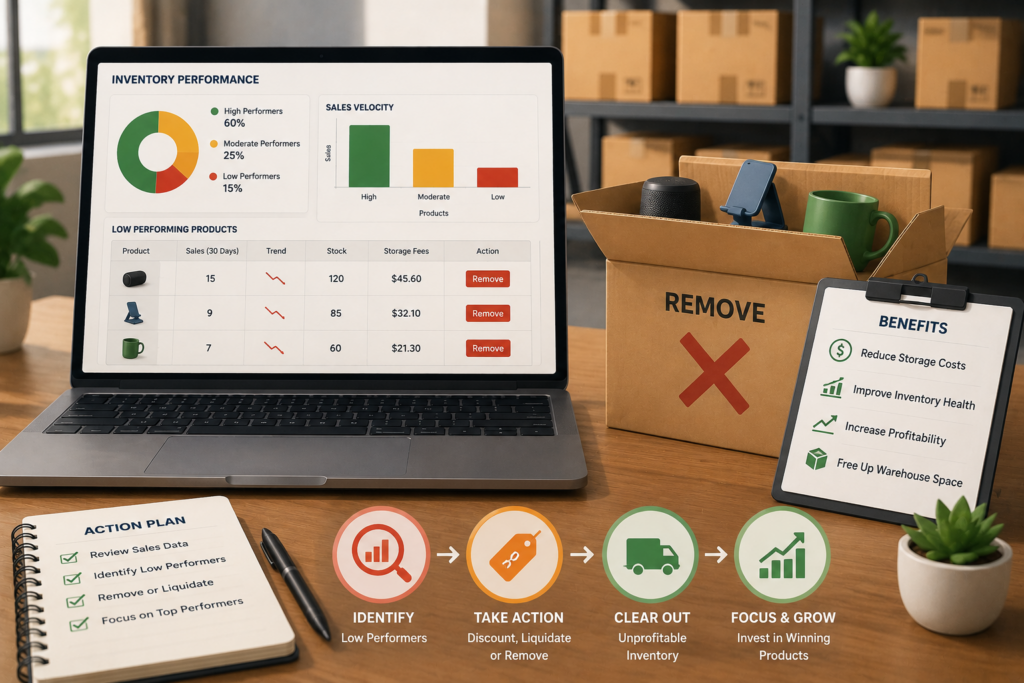
Not every product in your catalog will remain profitable forever. Some products may consistently generate low sales while accumulating storage fees.
Sellers should regularly identify products with:
Once identified, sellers can:
Eliminating underperforming products frees up storage space and allows sellers to focus on products that generate higher profits.
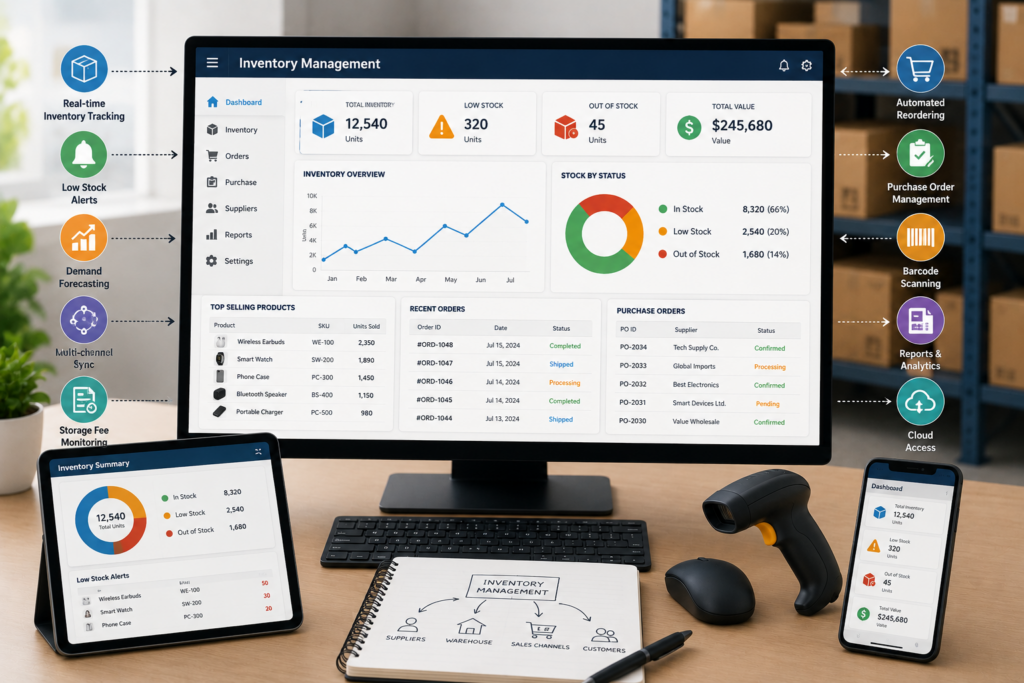
Managing inventory manually becomes difficult as an Amazon business grows. Inventory management software helps automate many important tasks and improves accuracy.
Good inventory tools can help with:
Automation reduces human error and allows sellers to make faster inventory decisions based on real-time data.
For growing Amazon businesses, inventory software can save both time and money while preventing costly overstock situations.
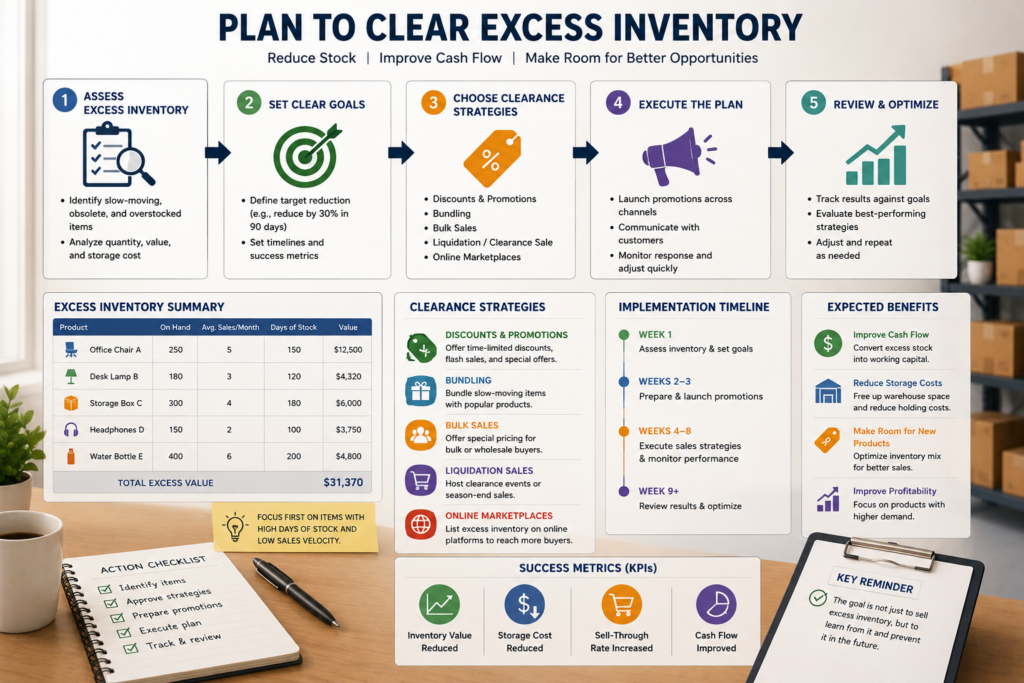
Sometimes, excess inventory is unavoidable. When that happens, sellers need a strategy to clear stock quickly before storage costs continue increasing.
Amazon offers several ways to move excess inventory:
Promotions & Discounts
Amazon Outlet
Amazon Outlet helps sellers promote discounted overstock inventory to bargain-focused shoppers.
FBA Liquidations
Through Amazon’s liquidation program, sellers can recover part of their inventory cost instead of paying ongoing storage fees.
Removal Orders
Sellers can also remove inventory from Amazon warehouses and sell it through other channels.
A proactive clearance strategy helps reduce losses and improve cash flow.
Excess inventory can quickly hurt an Amazon business through rising storage fees, blocked cash flow, and reduced profitability. However, sellers who actively monitor inventory, forecast demand accurately, and take action early can avoid most overstock problems.
The most successful Amazon sellers combine multiple inventory management strategies, including:
By staying proactive, sellers can maintain healthier inventory levels, improve profitability, and build a more sustainable Amazon business in the long run.